

In the modern industrial system, non-standard parts processing is increasingly becoming a core force driving technological innovation and industrial upgrading. With the rapid development of high-end manufacturing, aerospace, new energy vehicles, medical devices, and other fields, the demand for personalized, high-precision components is growing steadily. Non-standard machining technology, with its high flexibility and customization capabilities, is injecting new momentum into industrial development.
Non-standard parts processing serves as an "essential guarantee" tailored to specific industrial needs. In high-end equipment manufacturing and production under special working conditions, machinery often requires components with unique dimensions, materials, and structures that standardized parts cannot meet. Non-standard machining can customize components according to specific enterprise requirements, ensuring perfect compatibility with equipment design. This avoids malfunctions or performance losses caused by mismatched parts, thereby guaranteeing stability and safety in specialized production scenarios.
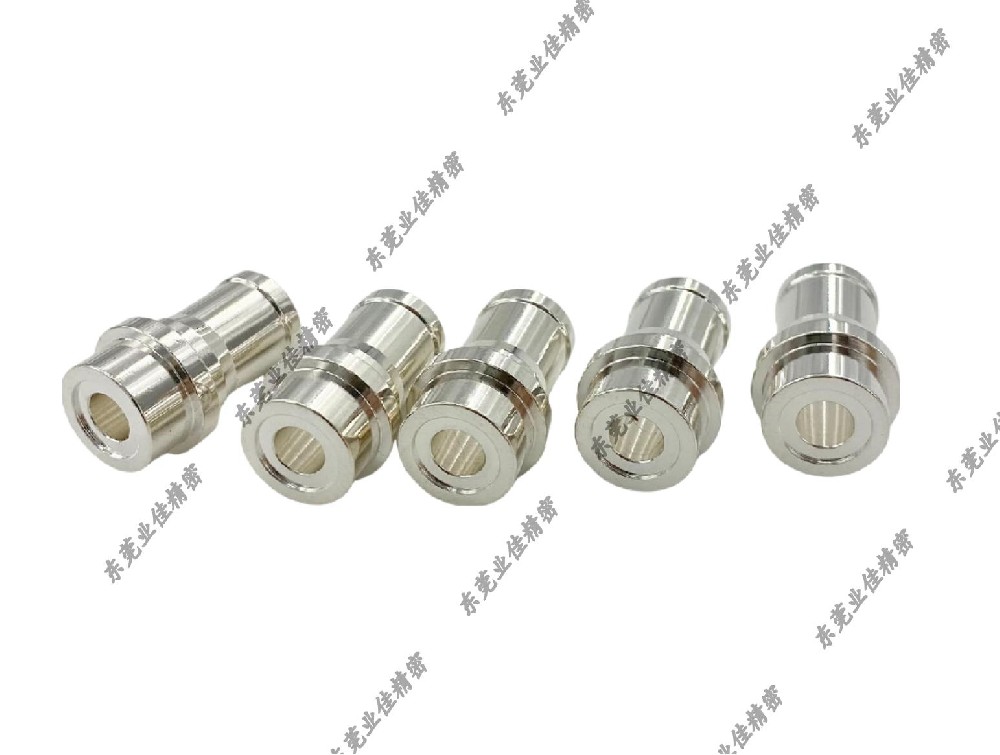
Non-standard parts processing refers to a manufacturing process that involves personalized design, production, and assembly based on specific customer requirements. Unlike the mass production of standardized components, non-standard machining places greater emphasis on product uniqueness, precision, and functionality. This characteristic enables it to play an irreplaceable role in many critical fields. For example, in the aerospace industry, non-standard parts can meet requirements for high strength, lightweight properties, and corrosion resistance in extreme environments. In the medical device sector, customized implants or surgical tools can significantly enhance treatment outcomes and patient safety.
Furthermore, advancements in non-standard machining technology have driven the development of smart manufacturing and the industrial internet. Through the deep integration of technologies such as computer-aided design (CAD), computer-aided manufacturing (CAM), and computer numerical control (CNC) machining, non-standard parts processing has achieved a high-precision and high-efficiency production model. This not only substantially shortens product development cycles but also reduces production costs, providing enterprises with stronger market competitiveness.
It is worth mentioning that, amid the restructuring and transformation of global supply chains, non-standard parts processing has become a key strategy for many companies to adapt to market changes. Small and medium-sized enterprises can quickly respond to customer demands through non-standard machining services, while larger corporations leverage this technology to diversify and premiumize their product portfolios. To some extent, non-standard machining capability has even become an important indicator of a country’s manufacturing prowess.
However, this field also faces several challenges, such as a shortage of technical talent, high research and development costs, and difficulties in quality control. In the future, with the further application of new technologies such as artificial intelligence and additive manufacturing (3D printing), non-standard parts processing will evolve toward greater intelligence and digitalization, unlocking new possibilities for global industry.
In summary, as a vital component of modern manufacturing, non-standard parts processing not only meets the demand for high-performance, customized products across multiple industries but also provides solid support for industrial innovation and sustainable development. Its significant influence continues to expand, and it is poised to become a critical element in future industrial competition.