

Amid the wave of high-quality development in modern manufacturing, machining, as a key link in component forming, has its technical level directly affecting product precision and production efficiency. Currently, a range of common machining methods, leveraging their mature and reliable characteristics, have become the "main force" in production lines across various industries, providing stable support for fields such as automated equipment, auto parts, and aerospace components.
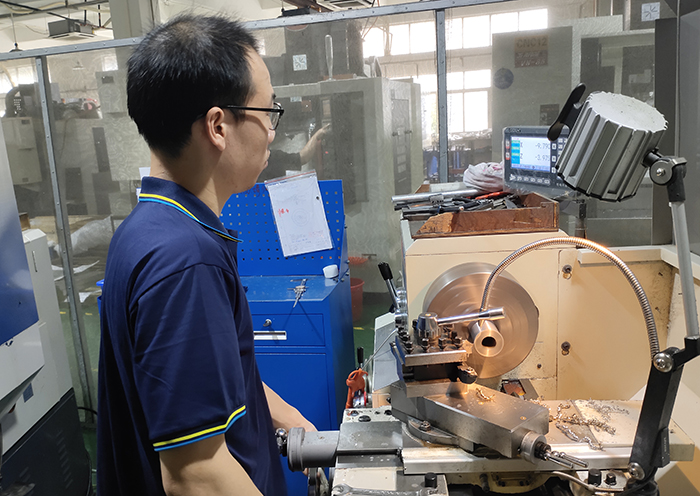
Turning is one of the most widely used machining methods, mainly applied to rotating parts such as shafts and disks. Under the operation of a CNC lathe, the cutting tool performs linear motion along the rotational trajectory of the workpiece, enabling precise machining of outer circles, inner holes, threads, and other features. For instance, when cutting the outer diameter of 7075 aluminum alloy shaft parts, the precision can be controlled within 0.01mm. This method is widely used in the production of transmission components for automated equipment.
Milling is proficient in machining complex planes, grooves, and special-shaped structures. Vertical or horizontal milling machines, through the coordination of high-speed rotation of cutting tools and multi-directional movement of workpieces, can machine complex parts such as gears and casings. Taking DT4C electrical pure iron precision components as an example, milling can accurately mill the positioning grooves of the parts, meeting the strict structural precision requirements of electromagnetic components. It is a key process in the machining of core components for automated equipment.
Although drilling is relatively simple in operation, it is the "basic process" for part hole machining. Radial drilling machines and CNC drilling machines can drill holes of different diameters in metal materials, providing positioning references for subsequent assembly. In the housing machining of automated equipment, drilling needs to first make bolt holes; the hole position accuracy directly affects the assembly stability of subsequent components, and the hole spacing error is usually required to be no more than 0.1mm.
In addition, as the "final checkpoint" of high-precision machining, grinding performs fine polishing on the part surface through high-speed rotation of the grinding wheel, which can control the surface roughness below Ra0.8μm. It is often used for machining parts that require high surface finish, such as hydraulic valve cores and precision bearings.
With the advancement of intelligent manufacturing, these common machining methods are deeply integrated with numerical control technology and the Internet of Things (IoT), realizing the automation and digitalization of the machining process. Insiders in the industry stated that mastering and optimizing these basic machining methods remains the key for the manufacturing industry to enhance its core competitiveness, and will lay a solid foundation for the sustainable development of my country's high-end equipment manufacturing.