

Precision machining is one of the most commonly used production methods in industrial production. It can use various types and specifications of processing equipment to process a variety of mechanical parts. In industrial manufacturing, precision machining is an essential link because it can process raw materials into precision parts, providing strong support for the subsequent production process.
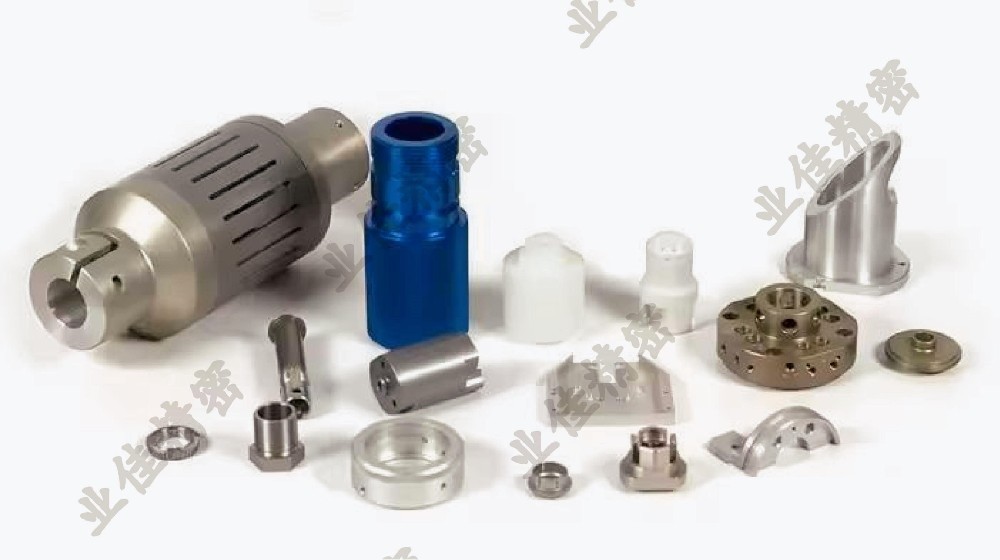
In the process of precision machining, the most commonly used processing methods include turning, milling, drilling, grinding and wire cutting. Among these processing methods, turning is the most basic and commonly used processing method. Turning refers to rotating the workpiece and using a tool to cut on its surface to produce the desired shape.
In addition to turning, milling is also a very common processing method. Milling refers to a processing method that uses a tool to move on the surface of a workpiece and rotate the tool at the same time to remove material on the surface of the workpiece to obtain the desired shape. Drilling refers to using a drill bit to drill holes in a workpiece. It is often used to make holes, stops, and connect workpieces.
Grinding is the use of a grinding machine to polish the surface of processed parts to achieve higher precision and better surface finish. Grinding machines can be divided into surface grinders, cylindrical grinders, internal cylindrical grinders, center grinders, etc. Different types of grinders can meet different processing requirements.
Wire cutting is a modern processing method that uses tungsten wire as the cutting tool and the principle of discharge heating to cut the required shape on the surface of the workpiece. Wire cutting is widely used because of its high precision and high efficiency, especially in the processing of electronic components and mechanical parts.
The process flow of precision machining usually includes preparation work, processing procedures, quality inspection and packaging. In the preparation stage, the raw materials to be processed are selected, cut, welded, heat treated, etc. In the processing process, according to the different shapes and processing requirements of the required parts, the corresponding processing equipment and processing methods are selected for processing. In the quality inspection stage, three-dimensional coordinates, optical projectors, hardness testers and other equipment are used to inspect processed samples, and strict quality control is carried out to ensure that each product meets national quality standards.
To sum up, precision machining is an indispensable and important link in industrial production. Through the combination of different types of processing equipment and different processing methods, precision parts of different shapes and materials can be processed, providing strong support for all walks of life. In the future, more technologies and innovations will be applied in the field of precision machining to continuously improve the efficiency and quality of product processing and promote further improvement of industrial development.