

In the mechanical machining industry, grinding process is one of the key technologies for achieving high-precision and high-quality surface machining. Especially in fields such as aerospace, medical equipment, and precision instruments, there are extremely high requirements for the dimensional accuracy, geometric shape, and surface roughness of parts. How to scientifically select and optimize the grinding process has become a core issue in improving product quality and production efficiency.
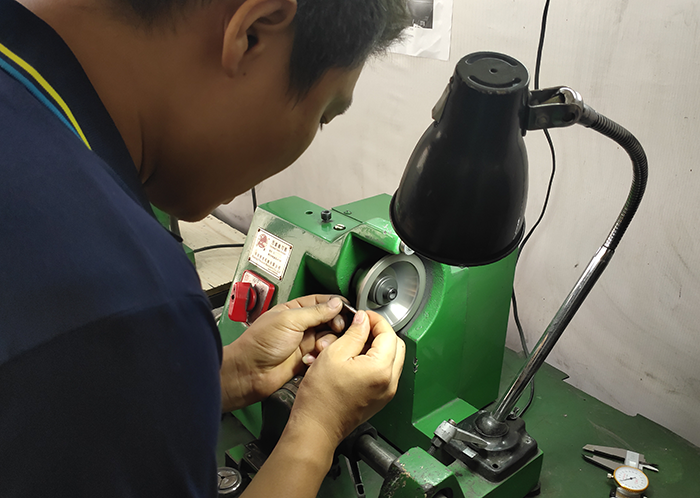
Selection of Grinding Processes
In selecting a grinding process, factors such as part material, processing requirements, production volume, and cost must be comprehensively considered.
1.Part material: Different materials require different grinding methods and grinding wheels. For example, cemented carbide typically uses diamond grinding wheels, while steel often uses corundum grinding wheels. For materials with high hardness, grinding wheels with good wear resistance should be selected.
2.Processing requirements: Grinding types are chosen based on precision and surface quality needs. Surface grinding is preferred for high-precision flat surface processing; internal grinding is required for inner hole processing; and CNC grinders are suitable for complex curved surfaces.
3.Production volume: Mass production is suitable for special-purpose grinders and high-efficiency processes such as high-speed grinding; small-batch, multi-variety production is better suited for highly flexible CNC grinders.
4.Cost control: On the premise of meeting quality requirements, economical grinding wheels and optimized process parameters should be selected to reduce
Optimization of Grinding Processes
The optimization of grinding processes aims to improve processing efficiency, quality, and economy, focusing on the following aspects:
1.Grinding wheel selection and dressing: Choose appropriate grinding wheel material, grain size, and hardness based on the workpiece material. Regularly dress the grinding wheel to maintain its sharpness and shape accuracy, preventing burns and cracks.
2.Process parameter optimization: Reasonably set parameters such as grinding wheel speed, workpiece feed rate, and cutting depth. High-speed grinding can improve efficiency but requires controlling thermal effects; fine dressing parameters can improve surface roughness.
3.Cooling and lubrication: Use effective coolants to reduce grinding heat, preventing workpiece deformation and surface damage. Optimize coolant flow rate, pressure, and injection methods to ensure adequate cooling and lubrication.
4.Equipment and tool management: Select high-precision, high-rigidity grinding machines and perform regular maintenance to ensure stability. Utilize online inspection systems to monitor the machining process in real-time and adjust parameters promptly.
5.Process innovation and intelligentization: Introduce advanced technologies such as adaptive grinding and intelligent monitoring, optimize processes through data analysis and machine learning, and achieve intelligent production.
The selection and optimization of grinding processes are crucial links in precision part machining. By means of scientific process selection, parameter optimization, and application of advanced technologies, enterprises can significantly improve product quality and production efficiency, as well as enhance market competitiveness. In the future, with the in-depth application of intelligent manufacturing and digital technologies, grinding processes will become more precise, efficient, and reliable, providing solid support for the development of high-end manufacturing.