

Product warpage is a common challenge during CNC aluminum parts processing. It is mainly caused by factors such as the material characteristics of aluminum, stress accumulation during processing, and improper clamping methods. The following are some effective methods to solve the problem of product warpage during CNC aluminum parts processing:
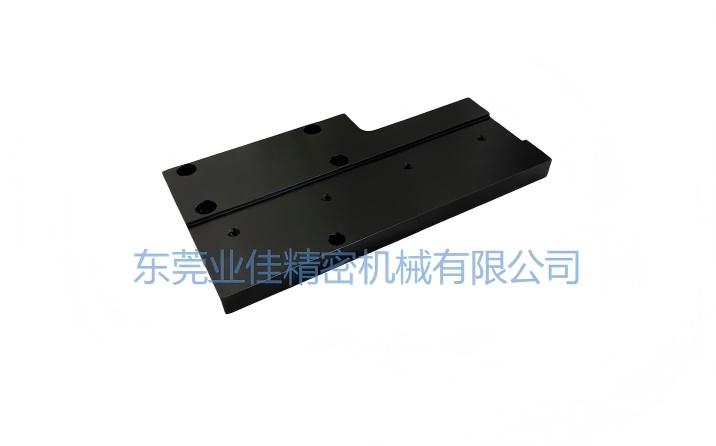
I. Optimize Product Design
Reduce Shape Complexity: Simplify the product design as much as possible, reducing unnecessary complex structures and thin-walled parts to lower the processing difficulty and deformation risk.
Reasonably Set Wall Thickness: Increasing the wall thickness can enhance the rigidity of the part and reduce deformation during the processing. However, it should be noted that overly thick walls will also increase material costs and weight.
II. Strictly Control the Quality of Blanks
Inspect Blank Quality: Before processing, strictly inspect the hardness, looseness, and other defects of the aluminum alloy blanks to ensure that the blank quality meets the processing requirements.
Aging Treatment: Conduct natural or artificial aging treatment on the blanks to eliminate the residual stress within the blanks and reduce deformation during processing.
III. Reasonably Select the Clamping Method
Adopt a Clamping Method with Good Rigidity: For thin-walled aluminum parts, an axial end-face pressing method with good rigidity should be used to avoid deformation caused by radial clamping.
Use Vacuum Suction Cups: For thin-walled and thin-plate workpieces, vacuum suction cups can be selected to obtain a uniformly distributed clamping force and reduce workpiece deformation.
Add Process Pillars: During the processing, some pillars can be pre-designed and tapped on the reverse side so that when processing the second plane, screws can pass through the reverse side of the fixture to lock the workpiece, increasing the clamping force and reducing deformation
IV. Optimize Processing Parameters and Tool Selection
Reasonably Select Tools: The material and geometric parameters of the tool have an important influence on the cutting force and cutting heat. Sharp tools should be selected to reduce cutting resistance and cutting heat, thereby reducing workpiece deformation.
Control Cutting Parameters: In CNC machining, by adjusting cutting parameters such as cutting speed, feed rate, and cutting depth, the cutting force and cutting heat can be reduced, thereby reducing workpiece deformation.
Adopt Symmetrical Machining: For thin-walled aluminum parts, symmetrical machining should be used to balance the stress on the opposite sides, achieving a relatively stable state and reducing deformation.
V. Strengthen the Monitoring of the Processing Process
Real-time Monitoring of Cutting Force and Cutting Temperature: Real-time monitor the cutting force and cutting temperature through sensors and promptly adjust the processing parameters to avoid workpiece deformation caused by excessive cutting force or cutting temperature.
Regularly Check Tool Wear: Tool wear will lead to an increase in cutting force and cutting heat, resulting in workpiece deformation. Therefore, the tool wear should be regularly checked, and severely worn tools should be replaced in a timely manner.
VI. Post-Processing Treatment
Aging Treatment or Heat Treatment: After processing, conduct aging treatment or heat treatment on the workpiece to eliminate residual stress and further reduce deformation.
Correct Deformation: For workpieces that have deformed, correction methods such as cold pressing and hot pressing can be used for repair.