

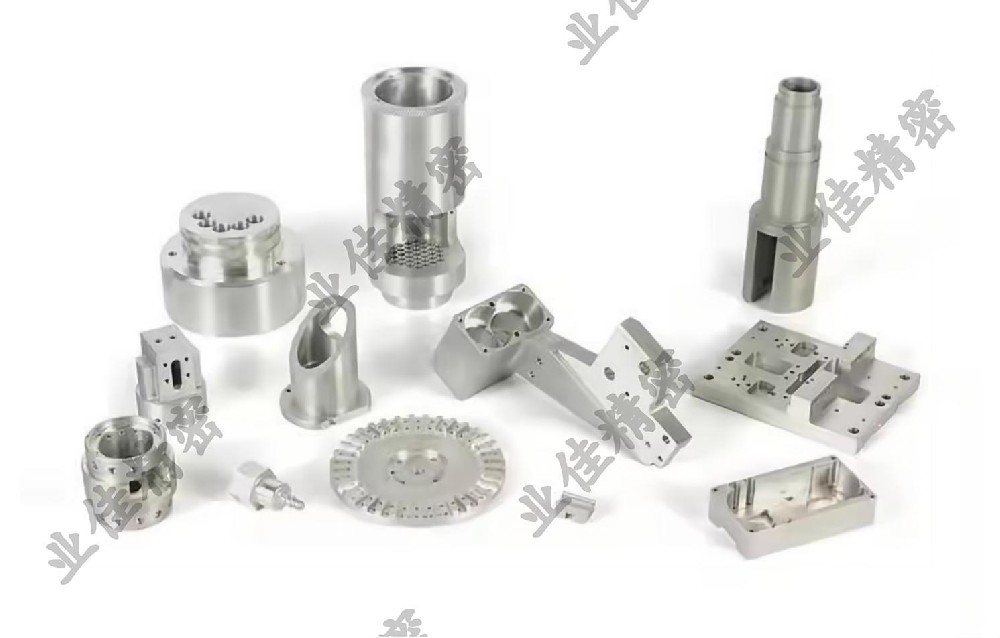
In precision parts processing, surface roughness has many effects on precision hardware parts. These effects are directly related to the performance, accuracy and service life of the parts. Yejia Precision is an enterprise specializing in precision parts machining, tooling fixtures and industrial automation (non-standard) equipment design and manufacturing. Its products cover aviation, medical, communications, optics, semiconductor, automation and automotive industries.
The following is a detailed analysis and explanation of these impacts:
Effect of wear resistance
Surface roughness is a key factor affecting the wear resistance of precision hardware parts. The rougher the surface of the part, the smaller the effective contact area between the mating surfaces, and the greater the pressure and frictional resistance, leading to accelerated wear. For example, a rough surface may have only 15% to 20% of the effective contact area, while the effective contact area of a precision machined part surface can reach 85% to 90%, significantly improving wear resistance.
Effect of coordination stability
For clearance fits, precision hardware parts with rough surfaces are more likely to wear during relative motion, causing the gap to gradually increase and affecting the stability of the fit. For interference fit, the microscopic convex peaks are squeezed flat during assembly, which reduces the actual effective interference and reduces the connection strength. Therefore, reducing surface roughness is crucial to maintaining the stability of hardware parts fit.
Effect of fatigue strength
There are large troughs and unevenness on the surface of rough precision hardware parts. These uneven areas can easily cause stress concentration under the action of alternating loads, accelerate the generation and expansion of fatigue cracks, thereby reducing the fatigue strength of the parts. By reducing surface roughness, stress concentration can be reduced and the fatigue strength of parts can be improved.
Effect of corrosion resistance
Parts with large surface roughness are more likely to accumulate corrosive gases or liquids. These substances penetrate into the inner metal layer through the microscopic valleys on the surface, causing surface corrosion. Reducing surface roughness can reduce the accumulation and penetration of corrosive substances on the surface and improve the corrosion resistance of parts.
Effect of sealing
Precision hardware parts often require good sealing performance. Rough surfaces cannot fit tightly together, causing gas or liquid to leak through the gaps between the contact surfaces. Reducing surface roughness can improve the sealing performance of parts and ensure their sealing effect under high pressure, high speed or corrosive environment.
Effect of measurement accuracy
The surface roughness of the measured surface of the part and the measuring surface of the measuring tool will directly affect the accuracy of the measurement. Especially in the precision measurement process, surface roughness has a more significant impact on measurement accuracy. Reducing surface roughness can improve measurement accuracy and ensure that the quality of precision parts processing meets requirements.
To sum up, in the processing of precision parts, surface roughness has an important impact on the wear resistance, fit stability, fatigue strength, corrosion resistance, sealing and other performance indicators of precision hardware parts. Therefore, surface roughness needs to be strictly controlled during processing to ensure that the performance and quality of hardware parts meet requirements. This can be achieved by optimizing CNC machining processes, selecting appropriate machining parameters, and using advanced CNC machining equipment.
Dongguan Yejia Precision Machinery Co., Ltd. has more than 90 sets of advanced manufacturing and testing equipment such as CNC large gantry machining centers, CNC machining centers, precision CNC milling machines, lathes, grinders, precision calibration machines, CMM, and electronic height gauges. Interested parties can contact us!